Skip to content

the wedding diary · guides · Planning, digitally

15 questions to ask a wedding venue when your wedding has more than one day

The tour was lovely and the manager was charming, and none of that answers whether the hall can hold a henna night on Thursday and a düğün on Saturday, feed three hundred people halal, and let the davul in at the door. The questions a venue contract for a single day never has to answer — asked before you sign, while you are still choosing a wedding venue for more than one day.

By , editor · published · updated · 6 min read

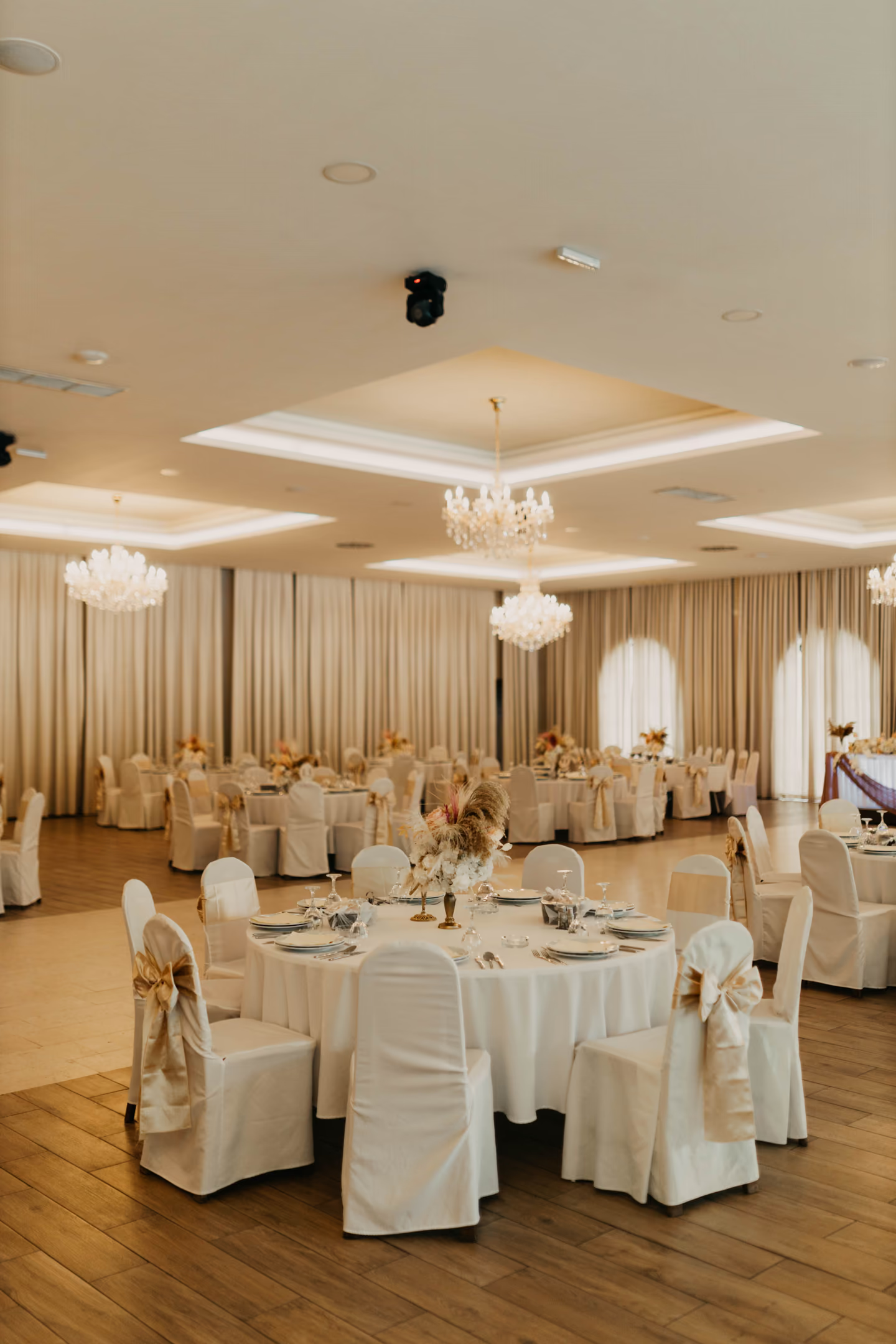
An empty wedding banquet hall with round tables in white linen and chandeliers, set before guests arrive.
A hall answers questions best when it is empty and you have the list in your hand. Photo: Mehmed Lukavackic · Pexels

01

Where these questions come from

A venue contract is written for one evening: one room, one arrival, one head count, one closing time. A wedding with a sangeet on Friday and a ceremony on Saturday, or a kına gecesi on Thursday and a düğün on Saturday, breaks every one of those assumptions, and the contract does not tell you where. These fifteen questions are the gaps — the things a one-day agreement leaves open and a multi-day wedding walks straight into. Ask them on the tour, with the list in your hand, and ask for the answers in writing.
02

The days and the rooms

  • 1. Which days can you give us, and in which rooms? — A henna night wants a room for a hundred; a party wants a hall for four hundred. Ask whether the smaller room is a separate evening with its own price, and whether the big room can be seen at the hour you will use it — a hall at noon and a hall at ten are different rooms.
  • 2. What is the hard closing time, and what does an extra hour cost? — Not the time the music stops; the time the last person has to be out. The takı, the moment gold and money are pinned to the couple at a Turkish wedding, happens late, and a Nigerian reception runs long by design. Ask what an hour past the line costs before you need one.
  • 3. What can stay set up between two celebrations? — Flowers, lights, the stage. If the second day is in the same hall, ask what the changeover is, who does it, and whether you pay for the room in between.

03

The numbers

  • 4. When is the head count final, and what happens after that date? — Ask for the date in writing, per celebration. That date is the deadline for your own chasing of everyone who has not answered, and the reason the diary counts answers per celebration, in people.
  • 5. How do you count children and infants? — Some halls charge a child as half a plate, some as a plate, some not at all under a certain age. Ask, and ask separately about high chairs: not every child needs one, and not every hall has twenty.
  • 6. What does the kitchen need from us, and in what form? — Counts, never names: “six vegetarian, two without gluten, all halal”. Ask whether halal, vegetarian and no-alcohol cooking are the kitchen’s normal or a special request, and what the deadline for the counts is.
  • 7. What is the alcohol arrangement? — A dry wedding, a bar the guests pay at, an open bar, a minimum spend. Families differ and the venue should not be surprised on the night.
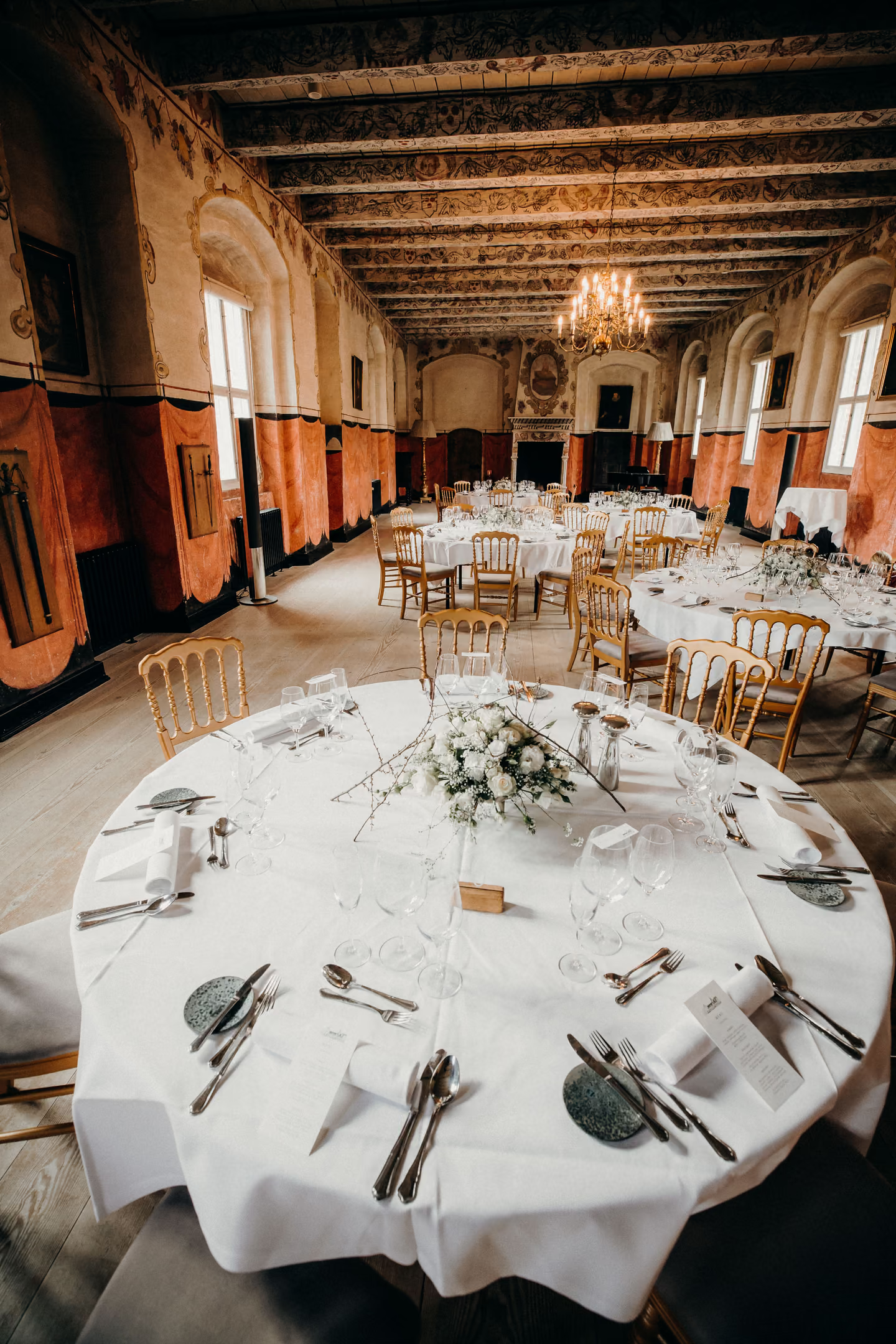
Round tables set with glasses and plates in an ornate hall with tall windows and a painted ceiling.
Ask what the room looks like at the hour you will use it, not at the hour of the tour. Photo: Rene Terp · Pexels

04

The evening itself

  • 8. How loud may the entrance be, and until when? — A davul and zurna at the door, a dhol leading the baraat (the groom’s procession at an Indian wedding), a live band. Ask about sound limits, the neighbour rule and the hour after which it changes.
  • 9. Who cues the venue’s own moments? — The walk-in, the first dance, the cake, the lights going down. Ask who on their side is responsible and how they want the times — that is the list you send a week out.
  • 10. Who is our one person on the night, and from when until when? — One name, one number, present from the first delivery to the last taxi. If the answer is “whoever is on duty”, ask again.
  • 11. Is there a quiet room? — For elders, for a prayer moment, for a child who needs to sleep at eleven. A hall that has one will show it to you; a hall that does not will describe a corridor.

05

The logistics

  • 12. When can our suppliers load in, and where? — The florist at two, the DJ at four, the cake at six. Ask for the loading door, the hours and whether someone is there to receive what arrives when you are not.
  • 13. Where do forty cars go? — A convoy arrives together and parks badly. Ask about the car park, the street and what happens with the coaches if the families travel by bus.
  • 14. Where do the gifts go, and who is responsible for them? — Envelopes, gold, the box at the door. Ask where they are kept during the evening and who hands them over at the end.

06

The plan

  • 15. How do you want to receive our plan, and how often? — The honest answer from a good venue is “once, and then tell us when it changes”. Give them one page they can read on their own: the diary gives the venue a link of its own with the celebrations it works, the times and how many people said yes to each — no guest names, nothing of another business — and once they have marked it read, the link shows what moved since. With the full version, you print the table plan for them.

07

What to do with the answers

Write them into the contract or into an e-mail the venue confirms. Then put the closing time and the load-in window into your day plan and share them with your wedding team — every business working that celebration then sees them — and put the head-count deadline in your calendar.

Frequently asked

When does a venue need the final head count?
It differs from venue to venue, so ask. Get the date in writing, per celebration, and ask what happens if the number moves after it — that date is also the deadline for your own chasing of the people who have not answered.
Can one venue host two celebrations on different days?
That depends on the venue. If it has two rooms of different sizes, that suits a henna night and a party. Ask whether the smaller room is priced as its own evening and whether anything from the first day can stay set up for the second.
What should a venue know about a wedding with several traditions?
What you will eat, what you will not drink, how loud the entrance will be and at what hour, whether there will be a prayer moment or a quiet room, and which moments of the evening the venue itself has to cue. Say all of it before signing; a surprise on the night is the venue’s problem and therefore yours.
How do we give the venue our plan?
As one page they can read on their own, that changes when your plan changes. The diary gives your venue a link of its own: the celebrations it works, the times and the head count per celebration — no guest names, nothing of another business, and what you agreed with the venue itself.

Related guides

Newlyweds walking out into a lakeside garden celebration, guests cheering at the edges

The next chapter is yours

Let’s get you
to “I do.”

One page your guests open from WhatsApp, and behind it your list, the answers and the day plan. The free version: every celebration, up to 100 guests in all. Confirm your address and your diary opens straight away.

Confirm your address and your diary opens straight away.

the wedding diary

Your people. Your celebrations. One shared plan.