
Skip to content

the wedding diary · guides · Planning, digitally

400 guests, no paper — how to count wedding guests

Your mother says two hundred. Your partner’s mother says two hundred and fifty. The hall says three hundred and twenty, and the list on the kitchen table says a hundred and eighty invitations. All four are right, and none of them is the number the kitchen needs. How to count wedding guests: households versus people, plus-ones, children, and the one date after which the number stops moving.

By , editor · published · updated · 6 min read

A tall stack of blank white cards on a dark surface, seen from above.
A hundred and eighty invitations. The hall does not count invitations. Photo: Mike Murray · Pexels

01

Four numbers that are all right

Every big wedding has four numbers, and they disagree. Your mother’s number is people she would like to see. Your partner’s mother’s number is the same, from the other side. The hall’s number is chairs. The list on the kitchen table is invitations — households, really, because “the Yılmaz family” is one line and six people. None of these is the number the kitchen needs, which is people who said yes, per celebration, on the day the number closed.

This is the arithmetic that turns the four into one. It is not complicated, but it has to be done in this order, and most lists do it in the other one.

02

Households are not people

An invitation goes to a household; a hall counts chairs. A hundred and twenty invitations can be three hundred people. So the unit of your list is a person, and the household is a grouping on top of it — “Aunt Nur and family” is four lines under one heading, not one line with a four in the margin.

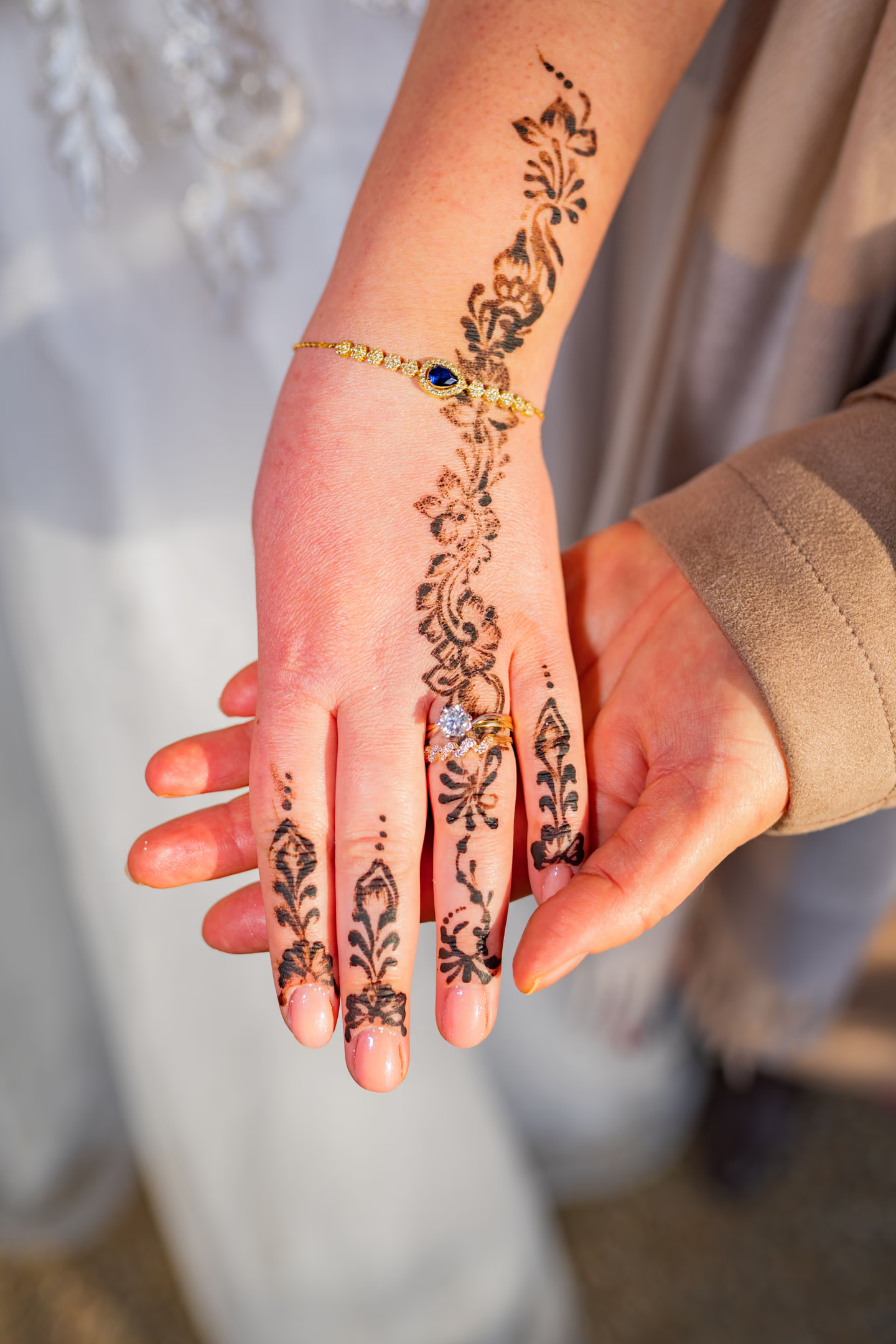
Keeping people separate matters most where a household splits between celebrations. At a Turkish wedding the kına gecesi, the henna night, asks only the women of a household; at an Indian wedding the sangeet, the music night, may be the whole household while the ceremony is not. One household then gives more than one answer, and a list built on households cannot hold that. A list built on people can. The diary’s guest list works this way: people in households, one line each, imported from Excel or your contacts — and when it is time to send, each person gets a link of their own.

03

Plus-ones are a rule, not a favour

The plus-one question costs more conversations than any other, because it is decided per name. Decide it once instead.

  • Partners who live together or are married are people — They go on the list under their own name, in the household. They are not plus-ones.
  • Everyone else gets a rule — “Partners of six months or more”, or “no plus-ones at the ceremony, yes at the party”, or “plus-ones for the wedding party only”. Write the rule down; the next case is an application, not a discussion.
  • Say the rule the same way to both families — Two mothers with two rules produce a list nobody can explain at the door.
A hand writing names in a lined notebook with a pen, close-up.
The first list is always names on paper. The arithmetic starts when you turn names into chairs. Photo: cottonbro studio · Pexels

04

Children are people the hall counts differently

Count children as people from the first day and mark them as children. The hall will count them its own way — as a plate, as half a plate, or not at all under a certain age — and a list that knows which lines are children can answer any of those in a minute. A list that left them out cannot answer at all.

Two more numbers the hall will ask for: how many children need a high chair, and how many children are infants who need nothing but a quiet room. Two numbers, per celebration, kept beside the head count.

05

The head-count deadline

The hall names a date after which the number is final — usually a week to ten days before each celebration. That is the hall’s deadline. Yours is three days earlier: the last day you chase everyone who has not answered, while the number can still change.

  • Give every guest three states, not two — Yes, no and not yet. An empty box looks like a no, and that is how someone disappears from your wedding without anyone deciding it.
  • Count the yeses for the hall — You pay for those. A few will not come; a big list always has some. Do not pay for the not-yets.
  • Keep the nos and the not-yets in the list — A late yes is then a line to flip, not a person to find again.
  • Close the number on the day you said you would — And tell the hall the date it closed, so they know it is final and not an estimate. The venue’s own link shows how many said yes to each celebration, as it stands.

06

No paper, and what that changes

Paper invitations are counted twice: once when they go out and once when the reply cards come back, by hand, into a spreadsheet. A link per guest is counted once. Every guest opens their own invitation, in their own language, with only their celebrations on it, and answers there — per celebration, without an account, after confirming the last four digits of the mobile number you have for them or their household, where you have one. The answer lands in your list, per person, and the head count per celebration is a number you read, not a number you make.

The mother who wants paper still gets paper: her whole invitation printed, with her own QR code, opening the same link. The arithmetic does not change. The counting does.

Frequently asked

Do we count children as guests?
Count them as people from the start and mark them as children, because the hall counts them its own way — some as a plate, some as half, some not under a certain age. A list that counts children from day one can answer any of those; a list that left them out cannot.
When do we give a plus-one?
As a rule, not per name. Married and living-together partners are people on the list, not plus-ones. For everyone else, decide once — “partners of six months or more”, or “no plus-ones at the ceremony, yes at the party” — and apply the rule.
When is the head-count deadline?
The date the hall needs its number, usually a week to ten days before each celebration. Set your own chase deadline three days before that, so the last round of calls happens while the number can still change.
What if people say yes and do not come?
They will, and a big list has a few every time. Give the hall the number of yeses; you pay for those. Then keep the not-yets and the nos in your list rather than deleting them, so a late yes is a line to flip, not a person to find.

Related guides

Newlyweds walking out into a lakeside garden celebration, guests cheering at the edges

The next chapter is yours

Let’s get you
to “I do.”

One page your guests open from WhatsApp, and behind it your list, the answers and the day plan. The free version: every celebration, up to 100 guests in all. Confirm your address and your diary opens straight away.

Confirm your address and your diary opens straight away.

the wedding diary

Your people. Your celebrations. One shared plan.