Skip to content

the wedding diary · guides · Planning, digitally

Who to invite to a wedding with several celebrations

The sangeet, the mehndi and the wedding. The kına, the nikah and the düğün. The henna, the aqd and the walima. The traditional ceremony and the white wedding. Who to invite to a wedding like that is three guest lists that only half overlap, and the overlap is exactly where it goes wrong. In which order to build them, where they tear, and how to hold them side by side without anyone quietly disappearing.

By , editor · published · updated · 6 min read

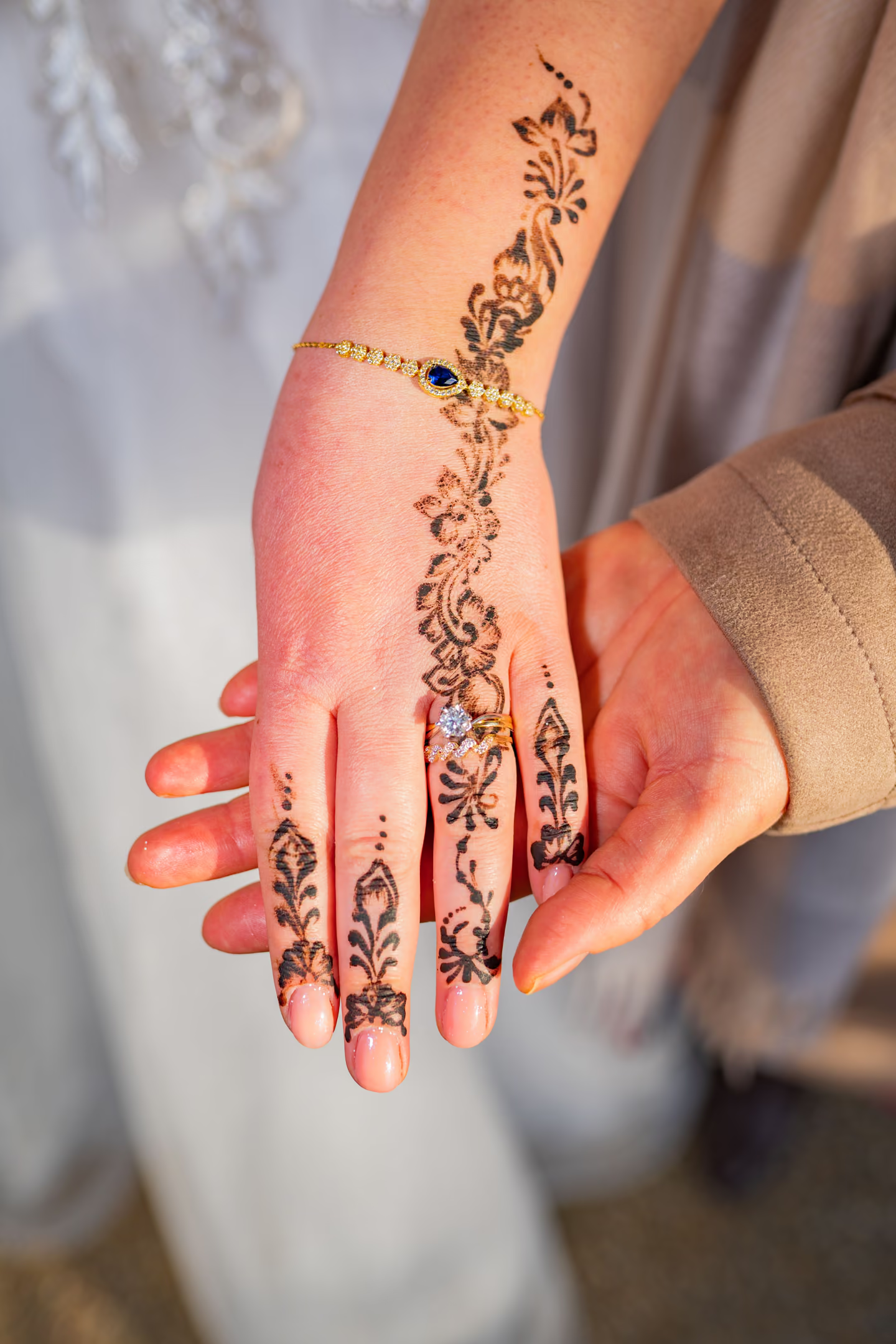
Two hands held together, one of them decorated with henna, in close-up.
The henna night is a decision about intimacy before it is a decision about numbers. Photo: amine photographe · Pexels

01

Three lists, not one list with three ticks

Whatever the tradition calls them, the celebrations of a multi-day wedding have three guest lists. A sangeet — the music night before an Indian wedding — and the wedding itself. A kına gecesi, the Turkish henna night, a nikah and a düğün. A Moroccan henna, the aqd (the marriage contract) and the walima. A traditional ceremony in one family’s town and a white wedding in another. The lists overlap, but never completely, and the overlap is precisely where it goes wrong. Whoever takes the big evening’s list as the base and adds two columns finds out halfway through that the henna list cannot be cut out of it.

Each list is bounded by something different. The henna night by what fits in someone’s home or a small hall. The ceremony by the room where it happens — a register office, a mosque, a mandap under a tent — which has a fixed number of places. The party by the hall and by what you spend. So build them in that order: first the smallest, then the middle one, then the largest.
02

Start with the smallest list

The henna list is a decision about intimacy. The party is a decision about a hall and a budget. Whoever starts with the party turns the henna night into a subtraction, and everyone taken off the big list notices.

So write the smallest list without looking at the other two. Who would you miss that evening? Usually the women of both families, the aunts your mother calls herself, and the friends you had before you had a partner. Only afterwards do you check whether the number fits the room.

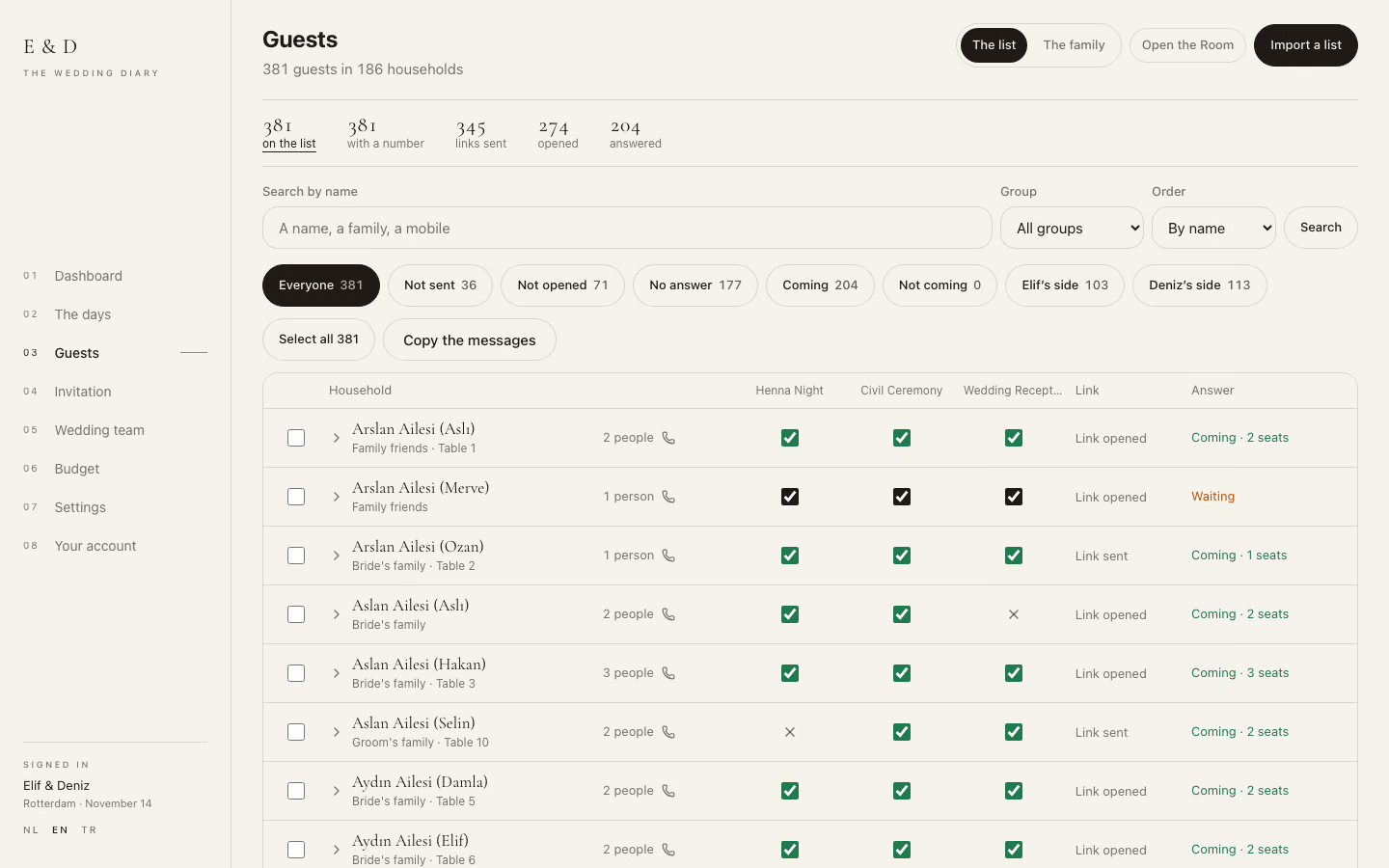
The guest list in the product, one household per line, with a tick for the henna evening, the ceremony and the wedding party beside each, and the household’s answer next to them.
Example wedding Elif & Deniz — the register with a column per celebration and one line per household, and the answers as they come in.

03

The four groups nearly everyone falls into

Sort by group, not by name. When the hall says three hundred and twenty and your list says three hundred and eighty, you cut a group. Cutting names is a conversation per person, and there are sixty of them.

  • All three — Parents, siblings, grandparents, the cousins you speak to week in, week out. This group is simply there; it costs you no thought at all.
  • The party only — Colleagues, neighbours, the wider circle, your parents’ friends. By far the largest group, and the only one that can shrink without anyone feeling passed over.
  • Henna and party, not the ceremony — Where the ceremony room is small, half the family lands here. Then say why. “The registry office has forty chairs” is a fact, not a rejection.
  • The ceremony only — The small group who can come by day but not at night: the elderly, people with young children, and the colleague you want at the town hall and nowhere else.

04

Where the lists tear

The four edge cases below cost more time together than all the other names combined. Decide them once, at the table, and write the rule down — not the decision per person, but the rule. The next case is then an application, not an argument.

  • The household that splits — An invitation goes to a household, but the henna night asks only the women of that household. One household then does not give one answer. Keep the people separate in your list and the household together in your head, not the other way round.
  • The partner of six months — The party, yes; the henna night, no. That is not a judgement about the relationship: the henna night is a small evening, and that is the whole explanation. Say it that way too.
  • The colleagues — Decide at department level, not per person. Asking one colleague and not the rest is a choice that comes back to the office on Monday.
  • The two mothers — Give each mother a number before she gives you names. Cutting a list that has already been written down is a very different conversation from a list that starts to size.
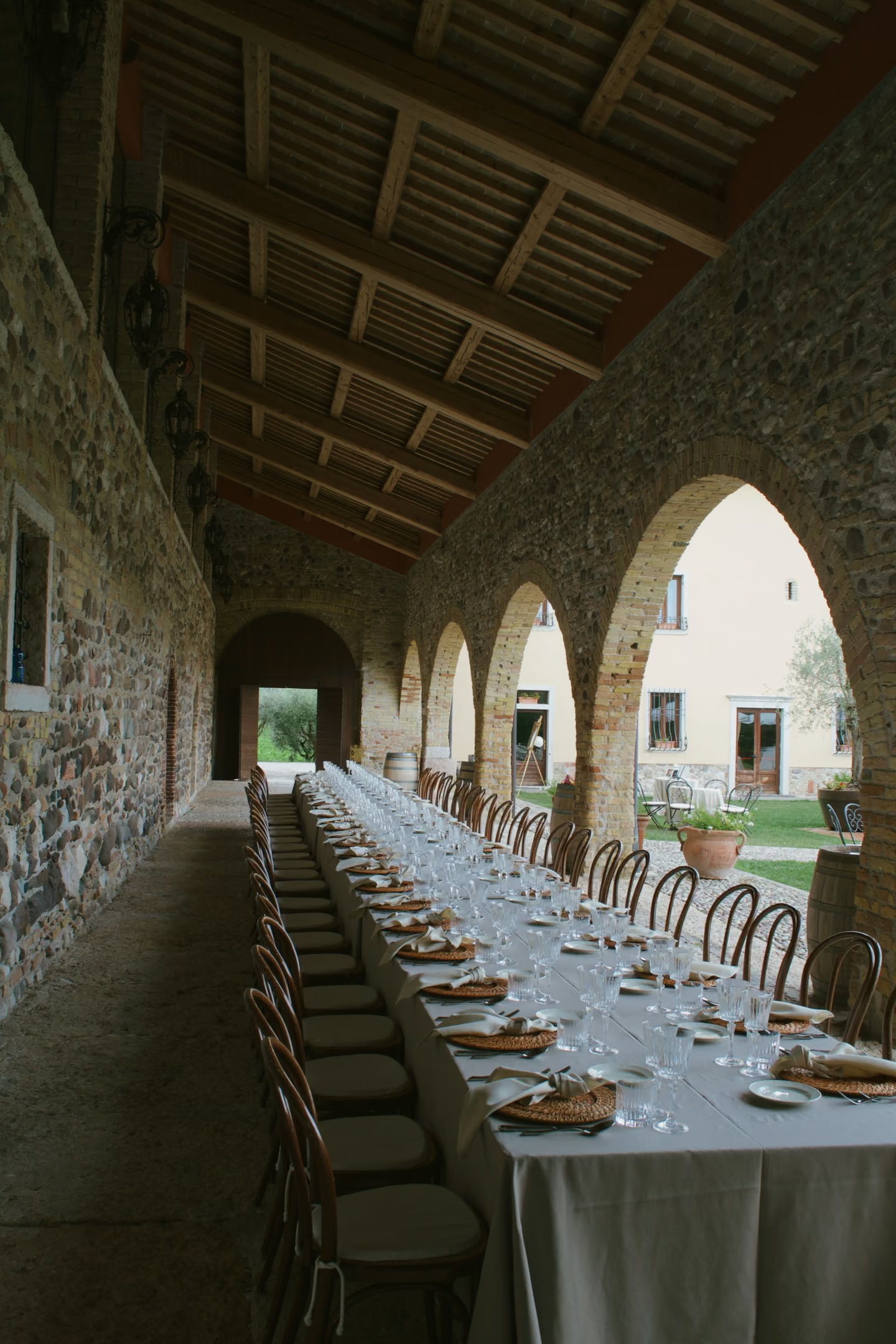
A long dinner table set for many guests under stone arches, empty chairs along both sides.
The hall counts chairs, not envelopes. Count the way the hall counts. Photo: Khoa Danh Nguyen · Pexels

05

How to hold the three lists side by side

One line per person, not per invitation. Beside it, three columns — one per celebration — with yes, no or not decided yet in each. That third state is the most important one: an empty box looks the same as a no, and that is how someone quietly disappears from your wedding.

Add one column that says how you know someone: which side of the family, which branch, or “work”. That is the column you cut on when the hall names a number.

Count people, never invitations. A hundred and twenty invitations is not a hundred and twenty chairs, and the hall counts chairs.

This is how the diary keeps it: the celebrations are not extra days but separate events, each with its own guest list and its own answers. Someone on two of the three stands once in your list and counts in two celebrations. The list comes in from Excel or from your contacts, by household, and every household’s answers land per celebration, counted in people.

06

The order in which people hear

The henna list hears first, usually by phone and usually from the mothers. The rest hear from the invitation. Make sure nobody learns from a forwarded link that they are not invited somewhere.

That is possible, because every guest gets their own link and sees only the celebrations they are asked to. One thing is worth saying out loud: a forwarded link is the sender’s invitation, not the receiver’s. Whoever forwards their link to a cousin sends their own name and their own celebrations along with it.

Answering takes no account and no password. A guest first confirms the last four digits of their own mobile number; guests whose number you do not have go straight through.

Frequently asked

In which order should we build the guest lists?
Smallest first, then the middle one, then the largest. Whoever starts with the big evening turns the henna night into a subtraction, and everyone taken off the big list notices.

Who is invited to the henna or mehndi night?
Traditionally the women of both families and the bride’s closest friends, in a house or a small hall. Write that list without looking at the others, from who you would miss that evening, and only then check whether it fits the room.
Do colleagues come to every celebration?
Usually only to the big evening, and the decision is made per department rather than per person. Inviting one colleague and not the rest is a choice that comes back to the office on Monday.
How do we keep the lists from drifting apart?
One line per person, one column per celebration, and three states in every box — yes, no, not decided yet. An empty box looks like a no, and that is how someone quietly disappears from your wedding.
Newlyweds walking out into a lakeside garden celebration, guests cheering at the edges

The next chapter is yours

Let’s get you
to “I do.”

One page your guests open from WhatsApp, and behind it your list, the answers and the day plan. The free version: every celebration, up to 100 guests in all. Confirm your address and your diary opens straight away.

Confirm your address and your diary opens straight away.

the wedding diary

Your people. Your celebrations. One shared plan.