Skip to content

the wedding diary · guides · Planning, digitally

A bilingual wedding invitation: one wedding, two languages

Your aunt reads Turkish, your colleague reads Dutch, and they receive the same invitation, each in their own language. A bilingual wedding invitation, then: how to decide per guest which language they read, why the Turkish text uses the formal siz, and what to do with a household that reads two languages.

By , editor · published · updated · 5 min read

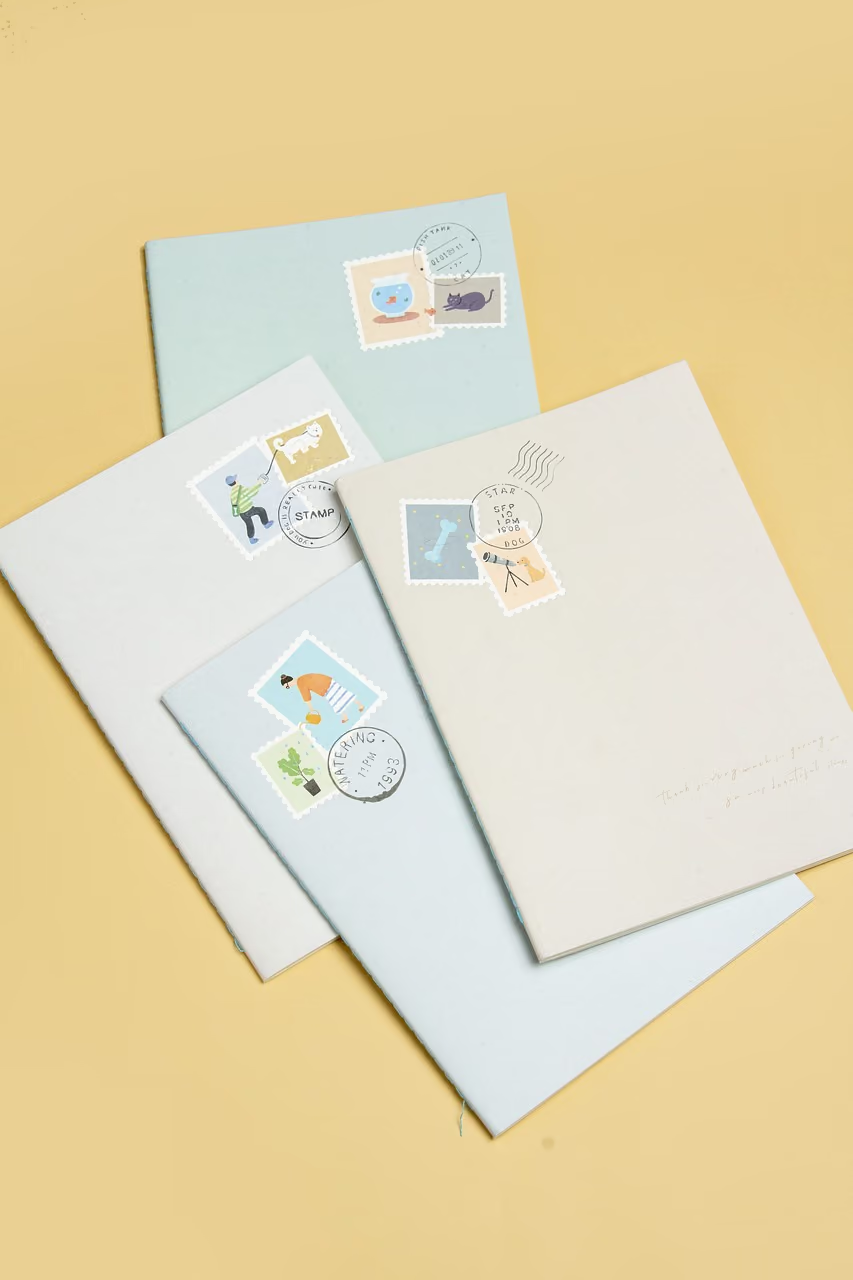
Three stamped envelopes side by side on a light surface, seen from above.
The same invitation, and yet every guest reads their own language. Photo: va703b · Pixabay

01

Language belongs to the guest, not to the page

A language button at the top of an invitation moves the work to the reader. For a cousin of thirty that is one tap. For an aunt of sixty-eight opening the link in WhatsApp, it is the reason she calls her daughter instead of answering.

So fix the language on the guest. Everyone opens the same invitation and everyone reads their own language — from their own record, not from the address in the browser. The invitation can be written in any language you add; the buttons around it are Dutch, Turkish or English.

02

How to decide who reads which language

You do not have to guess. Four rules cover nearly the whole list, and the rest you simply ask.

  • Ask whoever gave you the number — The person who hands you an aunt’s number also knows which language that aunt answers WhatsApp in. Ask at the same moment; afterwards it is a second round of calls.
  • Choose by generation, not by surname — Reading is not the same as speaking. The aunt who went to school in Turkey reads Turkish fastest; her daughter who grew up in Rotterdam speaks Turkish but reads Dutch more quickly.
  • In doubt about someone older, ask — and lean towards Turkish — The two mistakes rarely cost the same. A Dutch reader who gets Turkish frowns for a moment. A Turkish reader who gets Dutch sometimes never answers at all. Families differ, though: when you can, ask the person who knows her.
  • Outside the family: Dutch — Colleagues, neighbours, your parents’ friends. English only for those who genuinely read no Dutch — the cousin in London, the friend from Ankara studying here.
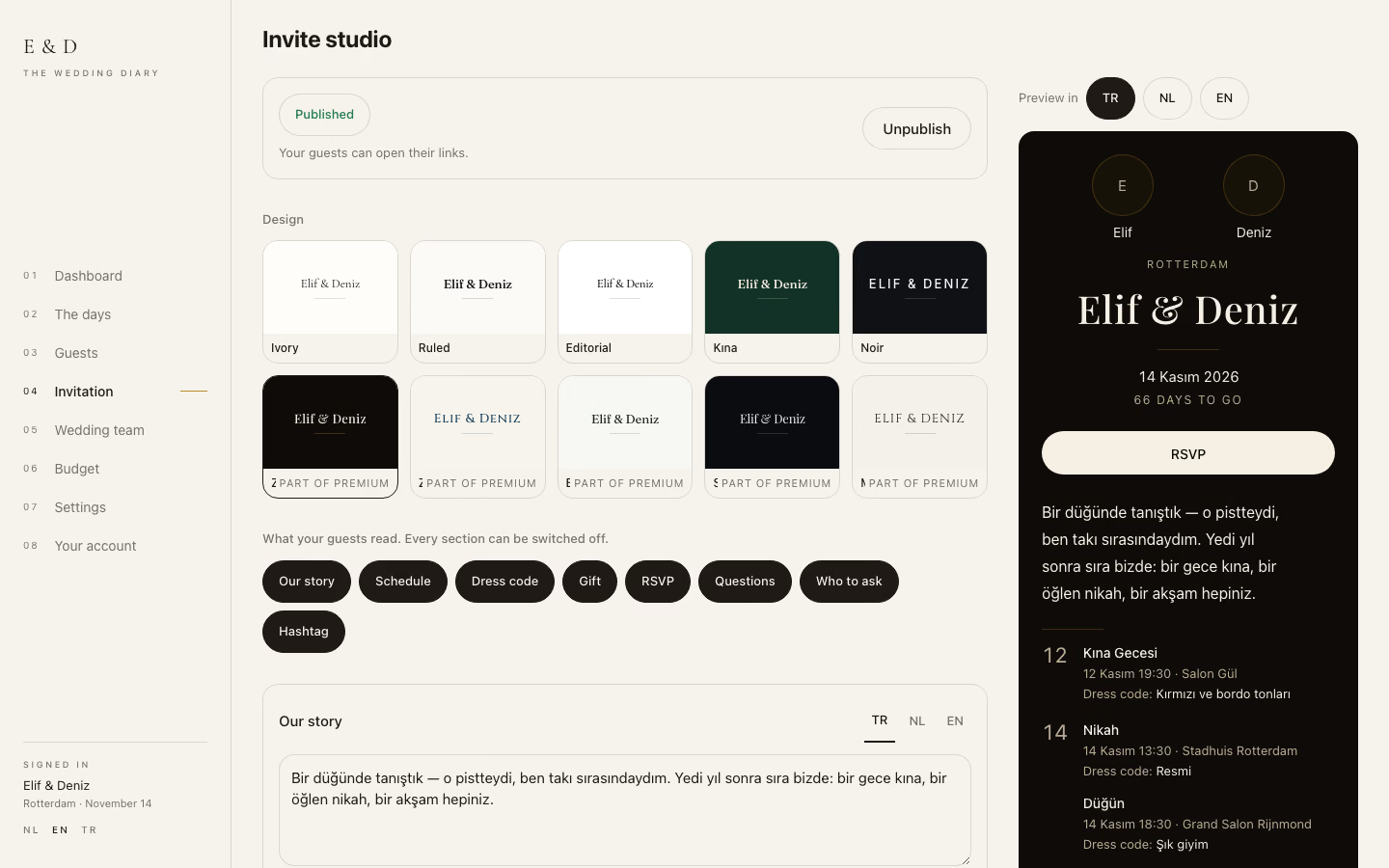
The invitation studio in the product: the story in three tabs, Turkish, Dutch and English, and on the right the preview as a Turkish-reading guest sees the invitation.
Example wedding Elif & Deniz — the invitation is written per language and opened by each guest in their own.

03

Why the Turkish text uses siz

Everything a guest reads is set in the formal siz. Not because formal is prettier, but because the mistake only cuts one way: sen is warm to a cousin and, in many families, too familiar for an aunt — and an invitation gets read aloud in a room where both are sitting.

Hold that form through the buttons and the confirmation line too. A page that says siz in the greeting and switches to sen at the button reads like machine translation — exactly the feeling an invitation must not give.

Practically: put the term of address in the name field. “Fatma teyze”, “Mehmet amca”, “Ayşe abla”. The greeting then reads like someone who knows her, rather than like an address label.

04

The household that reads two languages

This is the only genuinely hard case. A mother who reads Turkish and a daughter who reads Dutch live at one address and belong to one invitation. Language sits with the person, and so does the link.

There are two workable ways out, and one rule to remember.

  • Two guests, two links, two answers — Enter mother and daughter as two people in the same household. Each gets her own link in her own language, and each answers for herself.
  • Or: one language for both — Each still answers on her own link; the daughter can help her mother open hers.
  • The rule: the link’s language and the message’s language are two things — The invitation is in the guest’s language. The WhatsApp message you send it with is in the language of the person you are sending it to. Those may differ, and that is not strange.
An older man and woman laughing together, in black and white, close up.
Read the Turkish aloud to someone over sixty: she hears within two sentences whether the tone is right. Photo: StockSnap · Pixabay

05

What you write twice, and what you write once

Not everything on an invitation is prose. Some lines are data, and data does not get translated.

  • Names and venue names stay as they are — The venue’s name is what your guest types into the map and says to the taxi driver. Never translate it.
  • Addresses exactly as the map knows them — Write the address as the map link returns it, with house number and postcode. An address written slightly more beautifully is an address that is not found.
  • Times in twenty-four hours, in both languages — Add the day of the week. A date made only of digits is not read the same way in every habit.
  • Translate the dress line by meaning — “Feestelijk” and “resmî” do not give the same instruction. Write what you want to see, not what the dictionary gives.
  • What you do write twice — What kind of celebration it is, who is invited, what exactly you are asking, and the question about food.

06

What you test before you send

Fifteen minutes, once, before four hundred messages go out.

  • Open your own link in the language you read worst — You are not checking meaning but length. Turkish sentences run longer than Dutch ones, and a name with a term of address behind it breaks a line in the wrong place.
  • Read the Turkish aloud to someone over sixty — Not for translation mistakes — for tone. She hears within two sentences whether it is right.
  • Check the three longest names on your list — That is where the greeting breaks, and the greeting is the first thing everyone sees.
  • Look at the preview card in WhatsApp — It carries your names and the date, and never the guest’s name — because that link gets forwarded.

Frequently asked

Why not a language button on the invitation?
A language button moves the work to the reader. For a cousin of thirty that is one tap; for an aunt opening the link in WhatsApp, it is the reason she calls her daughter instead of answering.
Why is the Turkish text set in the formal siz?
Because the mistake only cuts one way: sen is warm to a cousin and, in many families, too familiar for an aunt, and an invitation gets read aloud in a room where both are sitting.
What about a household that reads two languages?
Enter mother and daughter as two people in the same household. Each gets her own link in her own language, and each answers for herself.
Newlyweds walking out into a lakeside garden celebration, guests cheering at the edges

The next chapter is yours

Let’s get you
to “I do.”

One page your guests open from WhatsApp, and behind it your list, the answers and the day plan. The free version: every celebration, up to 100 guests in all. Confirm your address and your diary opens straight away.

Confirm your address and your diary opens straight away.

the wedding diary

Your people. Your celebrations. One shared plan.