Skip to content

the wedding diary · guides · Planning, digitally

WhatsApp wedding invitations — the etiquette

Your aunt will read it in a room full of people, out loud. Your colleague will read it between two meetings. Your grandmother will hand the phone to whoever is nearest. The wedding invitation that arrives on WhatsApp is read by more people, faster, in more situations than any card — which is why the etiquette matters more, not less. One message per guest, the card the mother wants anyway, and the timing per tradition.

By , editor · published · updated · 6 min read

A woman in a blue dress sitting with a cup in one hand, smiling at the phone in the other.
An invitation on the phone is read wherever the phone is. Write it for that room. Photo: Alex Green · Pexels

01

Where this comes from

WhatsApp is how most of your guests will meet your wedding, whatever the tradition and whichever country the family is in. That is not a compromise; it is where the phones are. What goes wrong is not the channel but the manners, and the manners of a WhatsApp invitation are different from a card’s because the message is read in a different place: on a bus, in a kitchen, out loud in a room. These rules come from how the message actually gets read.
02

One message per guest

  • Their name is in it — “Dear Aunt Nur” before anything else. A message that starts with the wedding is a notice; a message that starts with the guest is an invitation. Put the term of address in the name: Aunt Nur, not Nur.
  • The link shows only their celebrations — A guest asked to the ceremony and the party should not open a page that says henna night. Every guest gets their own link, with their own name and their own days on it, in the language you chose for them.
  • Never a group — A group tells everyone who is in it and nothing about who is invited to what, and it makes the answer public. Half your relatives will not answer in public.
  • The message is in the reader’s language; the link is in the guest’s — The WhatsApp message goes to the person you are sending it to and is written for them. The invitation behind it is in the language of the guest who will read it. Those may differ, and that is fine. How to decide who reads which is in one wedding, two languages.

03

The preview card is the part that travels

The link shows a preview card before anyone taps it: an image, your names, the date. That card gets forwarded — to a cousin, to a group, to someone you did not invite. So the card carries your names and the date and never the guest’s name; the guest’s name is behind the link, where only the guest sees it.

Look at that card in your own WhatsApp before you send anything. It is the first thing every guest sees, and it is the only thing some people will ever see.

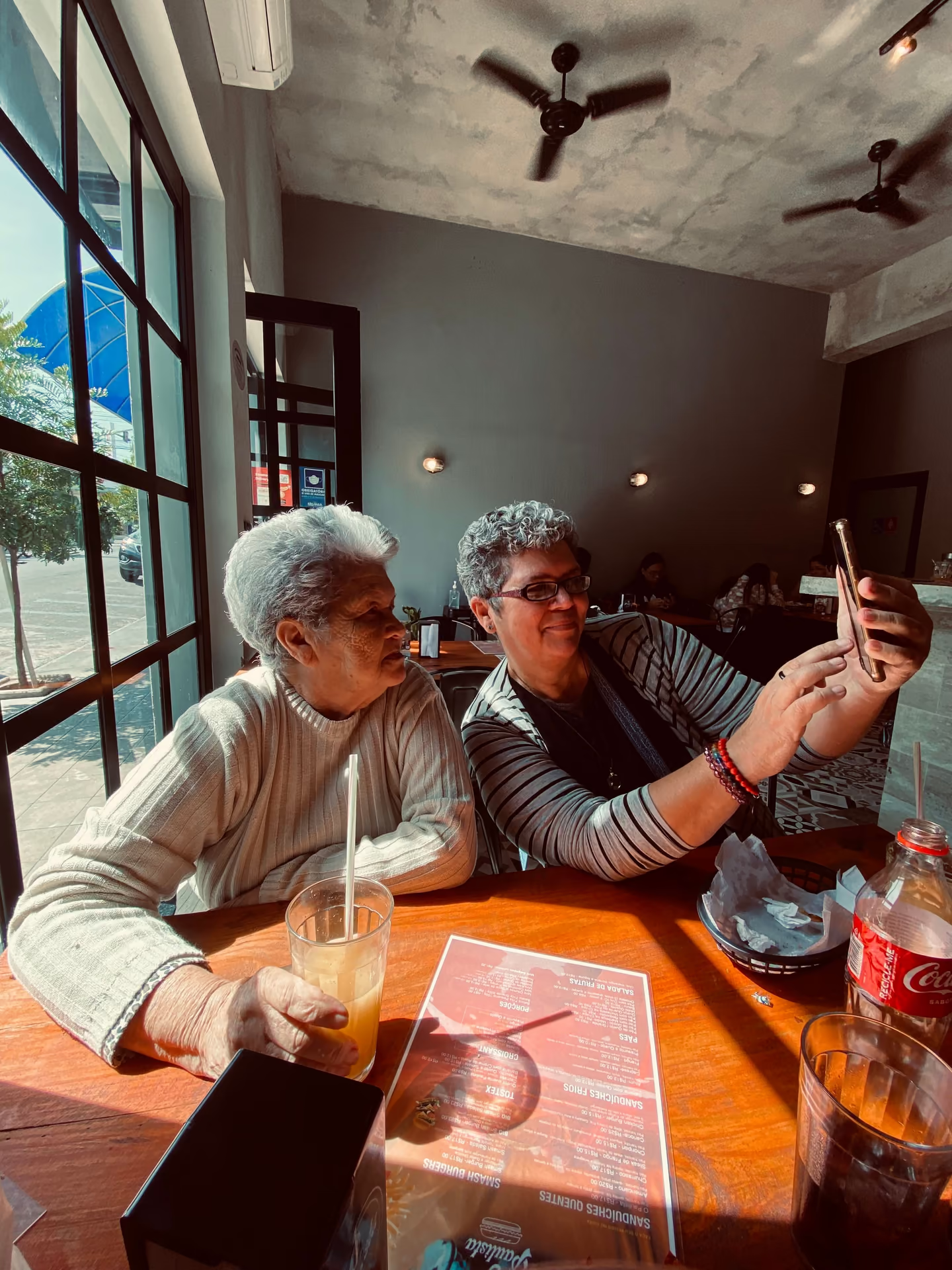
Two older people at a restaurant table looking at a phone together and laughing.
The grandparents will open it with someone. Send it to that someone too. Photo: Pedro Nasala · Pexels

04

The card the mother wants anyway

Someone in the family will want paper. Give it to them without an argument: their whole invitation printed, with their own QR code, opens the same page as the link, with the same answer form. The diary prints them in one go, one per guest with that guest’s own code, so the paper guests are counted in the same place as everyone else. A family can send the henna list on paper with the code and everyone else on WhatsApp; the answers land in one list.

05

Timing, per tradition and per generation

  • The elders hear by phone first — Before any message goes out. A grandmother who learns of the wedding from a link learns something else too.
  • The henna, mehndi or sangeet list hears from the mothers — Usually by phone, usually before the wider list, because that list is a decision about intimacy and the phone call is part of it.
  • Then the save-the-date, as soon as the dates are fixed — One line, the dates, the city. Nothing that can change.
  • The invitation, once the venues are — With the addresses exactly as the map knows them, and the times in twenty-four hours with the day of the week beside them.
  • The reminder, by hand, before the head count closes — One message to the people who have not answered, a few days before the venue’s deadline. The diary shows you who has not answered per celebration and opens WhatsApp with each one’s own link; you write the words and press send. Nothing is sent for you.

06

What not to do

  • Do not ask people to forward it — “Send this to anyone I forgot” invites everyone you did not invite.
  • Do not send the dress code as a separate message a week later — It belongs on the invitation, translated by meaning, not by dictionary.
  • Do not chase in the group — The people who have not answered know who they are. Ask them alone.
  • Do not send at midnight — The message arrives with a sound. Send in the hours you would call.

07

The ten seconds before you press send

Open your own link in the language you read worst, and check the length rather than the meaning. Read the message aloud once. Look at the preview card. Then send them one at a time, from your own phone — the sending happens beside the invitation, one guest at a time; the register’s “not sent” filter is your to-do list and the answers are your count.

Frequently asked

Is it rude to invite people to a wedding on WhatsApp?
Not if it is personal. A message with the guest’s name in it, sent to them alone, with a link that shows only their celebrations, is an invitation. A card image dropped into a group with forty people is a notice, and people treat it like one.
Should we send the invitation in a family group?
No. A group tells everyone who is in the group and nothing about who is invited to what. It also makes the answer public, and half your relatives will not answer in public. One message per guest, every time.
When do we send the WhatsApp invitation?
After the elders have heard by phone, and after the henna list has heard from the mothers. Then the save-the-date as soon as the dates are fixed, the invitation once the venues are, and the last reminder a few days before the head count closes.
What about grandparents who do not use WhatsApp?
Call them, then send the invitation to the person who reads their phone for them, and print them a card with the QR code. The card opens the same page. Nobody has to choose between paper and a link.
Newlyweds walking out into a lakeside garden celebration, guests cheering at the edges

The next chapter is yours

Let’s get you
to “I do.”

One page your guests open from WhatsApp, and behind it your list, the answers and the day plan. The free version: every celebration, up to 100 guests in all. Confirm your address and your diary opens straight away.

Confirm your address and your diary opens straight away.

the wedding diary

Your people. Your celebrations. One shared plan.